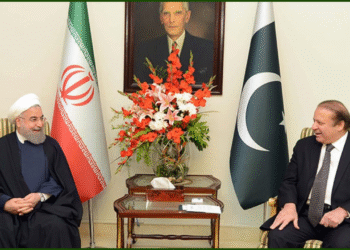


























Islamabad, April 13, 2025 – In a high-level meeting with a U.S. congressional delegation, Pakistan’s Interior Minister Mohsin Naqvi underscored his country’s pivotal role in combating terrorism, describing Pakistan as a “formidable wall” safeguarding the world from extremist threats. The talks, held in the capital on Sunday, centered on deepening counterterrorism collaboration and fostering stronger economic ties between the two nations.
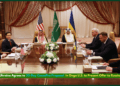
The U.S. delegation, comprising Congressmen Jack Bergman, Tom Suozzi, and Jonathan Jackson, engaged in wide-ranging discussions with Naqvi, joined by Pakistan’s Minister of State for Interior Talal Chaudhry, acting U.S. Ambassador Natalie Baker, and Interior Secretary Khurram Agha. The dialogue spotlighted trade, investment, border security, and the pressing need for enhanced cooperation to tackle rising militant violence.
Naqvi emphasized that terrorism remains a global scourge requiring unified action. “Pakistan stands at the forefront of this fight, but the burden cannot be ours alone,” he said, calling for greater international support. He urged the U.S. to share advanced counterterrorism technology and intelligence to bolster Pakistan’s efforts, particularly in its volatile western border regions. The minister highlighted the sacrifices made by Pakistan’s security forces, noting that the nation has paid a heavy price in its decades-long struggle against extremism.
The meeting comes at a critical juncture, with Pakistan grappling with a surge in attacks along its border with Afghanistan. Islamabad has repeatedly accused the Taliban-led Afghan government of providing safe havens to militants orchestrating cross-border assaults, a charge Kabul denies. Naqvi reiterated the need for regional accountability, stressing that unchecked militancy in Afghanistan threatens stability far beyond Pakistan’s borders.
Economic cooperation also featured prominently in the talks. Naqvi expressed optimism about expanding trade and investment ties with the U.S., citing Pakistan’s strategic location and growing market potential. He invited American businesses to explore opportunities in sectors such as energy, technology, and infrastructure, assuring the delegation of Pakistan’s commitment to creating a secure environment for investors.
The U.S. congressmen acknowledged Pakistan’s contributions to global security and expressed support for stronger bilateral ties. Congressman Bergman emphasized the importance of sustained dialogue, while Suozzi highlighted the potential for economic partnerships to drive mutual prosperity. Jackson underscored the shared interest in rooting out terrorism, pledging continued U.S. engagement.
The discussions set the stage for a crucial counterterrorism dialogue scheduled for June, aimed at addressing the evolving militant threat. Analysts view the upcoming talks as a chance to bridge gaps in intelligence-sharing and align strategies against groups exploiting regional instability.
As the meeting concluded, Naqvi reaffirmed Pakistan’s resolve to combat terrorism relentlessly. “We are not just protecting our homeland but shielding the world from chaos,” he said. The U.S. The delegation left Pakistan with a deeper understanding of its challenges, pledging stronger collaboration for global peace and security through enhanced diplomatic ties and joint efforts.
The talks reflect a broader effort to strengthen U.S.-Pakistan relations amid complex regional dynamics, with both sides eyeing practical steps to turn shared goals into tangible outcomes.